Episode 001
By the pen of Gítaú wa Kúng’ú (profgitauwakungu@gmail.com).
“Going forward, all leaders will need to ask themselves: Do we want an airport or a smart airport? A bank or a smart bank? A highway or a smart highway? A supply chain or a smart supply chain? A business model or a smart business model? A city or a smart city?” -’A Smarter Planet: The Next Leadership Agenda’ by Samuel J. Palmisano, CEO of IBM (Nov. 12, 2008).
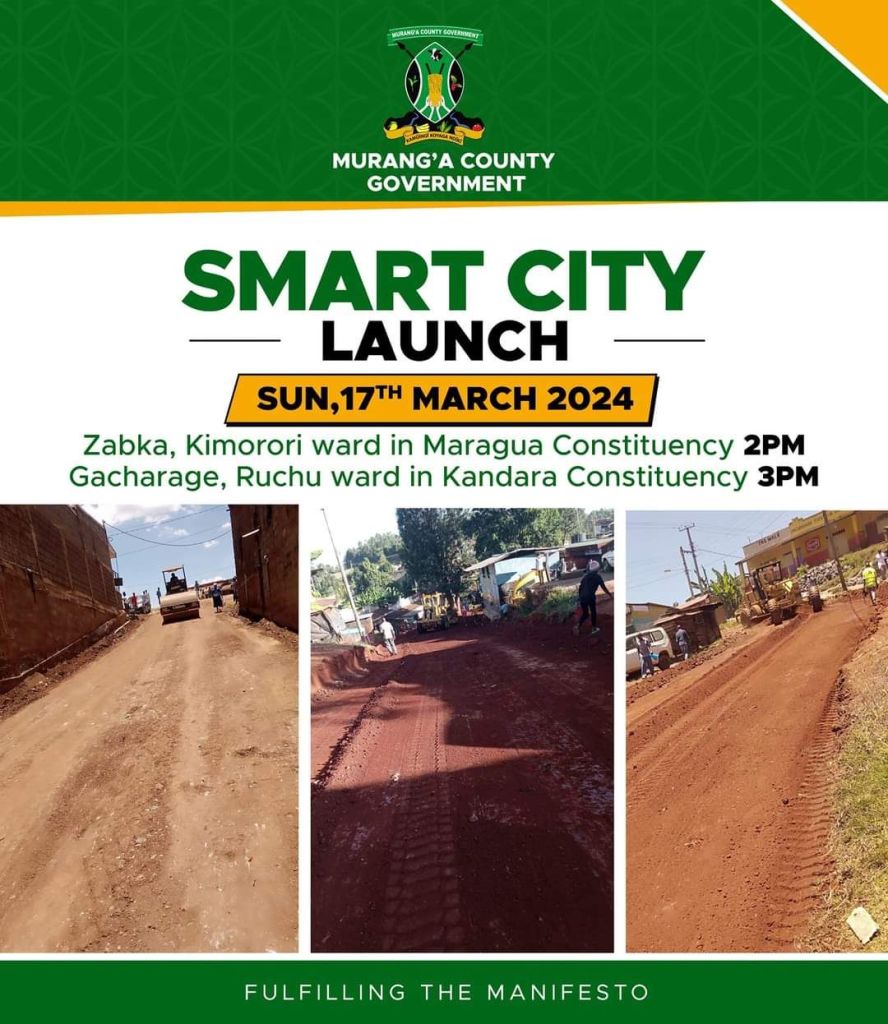
Dr. Irungu Kang’ata has been recently engaged, launching ‘Smart City’ programs in Murang’a county.
First, the governor implemented the Murang’a Youth Service (MYS) programme to create employment for resident youths to; clear bushes, clean the local towns, shopping centres and government institutions like ECDEs in the hope of enacting maintenance of proper hygiene through proper waste disposal, drainage and sanitation. Indelible an idea as it has proven!
Secondly, he has launched the tarmacking of several roads across the county in a bid to open up the county to investors and urbanisation.
So what is the idea behind this SMART CITY concept that the UoN PhD law graduate, senior counsel and governor of Murang’a County Dr. Irungu Kang’ata, is so ebulliently implementing? What is the sustainability of the project and; what socioeconomic development foundations should it lay for the residents’ posterity?
Good. “The father of SMART CITY,” Jonathan E wrote in ‘The Say,’ can be attributed to Walter Elias Disney in his ‘Disney World’ cartoon around the 3 O’clock of 20th century.
No wonder the first ‘smart cities’ started emerging in the late 1960s and 70s in America.
The cities were projected to ensure safe, hygienic and serene living conditions of the American citizens in urban centres.
The United Nations Centre for Regional Development (UNCRD)’s vision for a Smart City focuses: Smart Governance, Smart Environment, Smart Technology, Smart Economy and Smart Healthcare. So, when was this Smart City born?
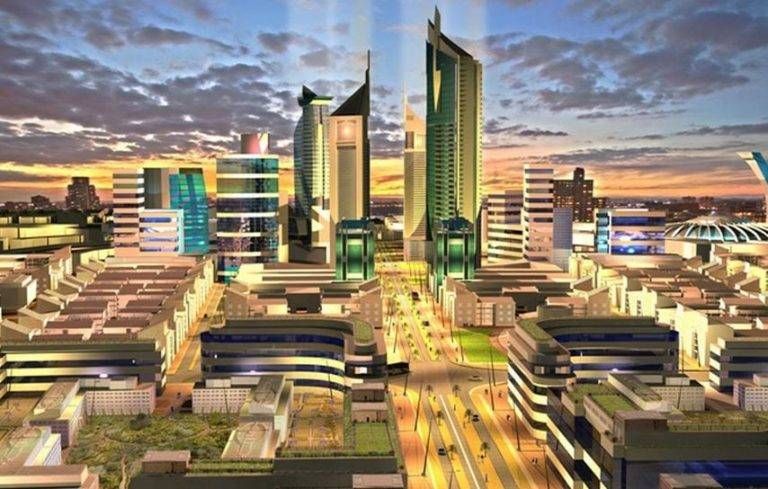
The term SMART CITY was first coined in 2007 by International Business Machines (IBM) corporation and Cisco.
According to Dr. Zvi Weinstein’s, “Why is it called a Smart City?”, ‘a SMART CITY is a city that experiences and practices means to join and participate with multi-sector stakeholders, builds interdisciplinary partnerships without both ego and politics. It maximizes bringing together the elements of a vision of inclusion and an imagination to become a real place for a take-off point in a changing world.”
This changing world is like a subdued mother suffocating, fainting, recuperating, crawling and panting her way through Smack City under the weight of her mountainous Puvati basket and its climate justice, corruption, health injustice, awry governance, over taxation contents. She wants to dump the fruit of her Arrogance Garden as deep as the abyss, far away from her children’s children posterity.
European Commission states that “a smart city goes beyond the use of digital technologies for better resource use and fewer emissions. It means smarter urban transport networks, upgraded water supply and waste disposal facilities, and more efficient ways to light and heat buildings. It also means a more interactive and responsive city administration, safer public spaces, and meeting the needs of an ageing population.”
The United Nations stipulates that the current 7.6 billion world population will rise to 9.8 billion. Statista stipulates that the Kenyan population will be around 91.6 million from the current estimate of 53.4 million people.
Where will this population live? In cities.
The GlobalData approximates Kenya’s urban growth rate at 7.6% per annum.
Currently, the Kenyan urban population is approximately 12 million and is expected to triple and overflow to 40 million by 2050, according to the World Bank sources (2016). President William Ruto put the latter estimate at 68 million last year.
Will the largest urban population still live in similar sham slums and horrendous suburbs?
The Affordable Housing program must be strategically and smartly implemented to elope the marauding razzmatazz.
What will this population be feeding on, taking to account that more than 51% of Kenyan land is ASAL, and only 11% is arable land, according to Statista and FAO sources as of 2021?
Murang’a county and Mt Kenya region in general lies within the Athi Water Catchment areas. It falls within what even the early European explorers and missionaries called ‘the granary of the East Coast of Africa.’ This puts Murang’a County and Mt. Kenya region at large, in an integral position in Kenya’s sustainable food security plans.
Back to our interest.
What will Dr. Kang’ata have to do to lay a sustainable foundation for future Murang’a and Kenyan smart cities at large?
Let’s save our breath for now to cool our porridge before we come back for Episode 2.
© Gítaú wa Kúng’ú.
 Honia-Heal Afrika Initiative (HAI)
Leave a comment