From Honia (Heal) Afrika Initiative HAI CBO
Dear Sen Veronica Maina,
RE: Why The Kiondo Basket Should Dominate the May 20-19 Festac Arts and Culture Festival, Kisumu City.
“The kiondo is a complex document. It is written in a certain language which can be decoded and understood. It is more than a container or carrier of foodstuffs to and from the market,” Dr. Joseph Waweru Kamenju: The Kikuyu kĩondo Cosmology and Architecture, 2002.
Salaam aleikum, my queen. This is to humbly partake in the supporting of your basketry weaving development initiative. In this open letter mama, the body takes you through a commentary on your proactive initiative; a brief on the kĩondo basket history, its symbolic representation and importance in the Agĩkũyũ community; and lastly, the reasons as to why you should ensure that the kĩondo basket dominates every other indigenous Kenyan artistic exhibition. Kamũingĩ koyaga ndĩrĩ. Welcome, mama.
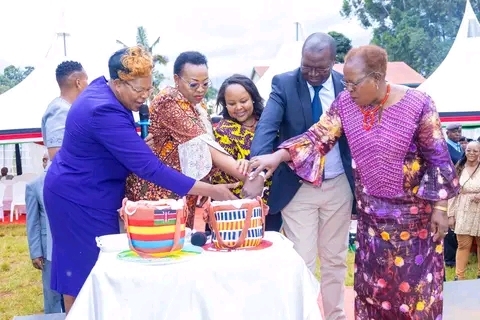
Last month on 15th April you served the community a joyful, successful Kigumo Basketry Expo and Fundraiser by honouring the Kigumo Basket Weavers group.
You managed to create market for kĩondo basket in not only East Africa Community but also overseas. That was insightful to choose Switzerland and China. The Swiss shall make the perfect kĩondo swish into the wider European Union market. The rich Chinese market shall sell the irresistible kĩondo to the Asian market. Incredible Ksh 5,090,000 was raised in the fundraiser! Please Mwene Nyaga lead the way!
That empowered not only our Kigumo basket weavers but also leading in the reclamation of our indigenous Gĩkũyũ women’s economic empowerment tradition: basketry.
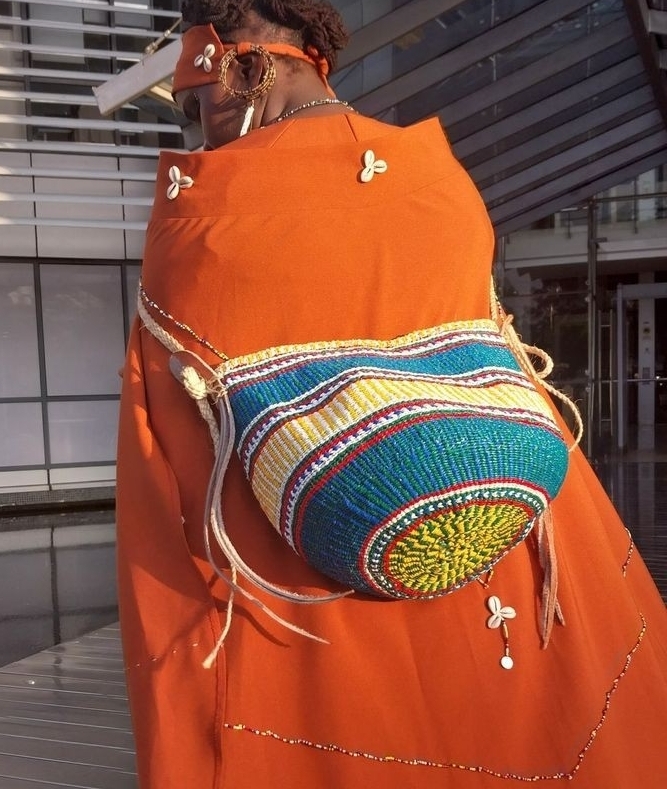
The kĩondo basket, an exoterically women’s item, is not only one of the most important cultural symbols amongst the Gĩkũyũ community but also among the most significant of cultural artefacts
in East Africa.
Well, from the eras of Ndemi na Mathathi, the kĩondo basket has been highly regarded highly for cultural wealth as for being the respectable Agĩkũyũ women’s carrier bag.
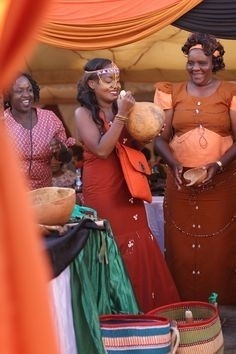
It is the undisputable bag in which prospective bridegroom ‘mũhikania’ or in-laws from the ‘mũthuuri’ husband’s side presents gifts to the ‘athoni,’ in-laws during the ‘kwaũra kiondo’ moment. Acceptance of the basket and its contents signifies the approval of a marriage relationship or a go ahead for dowry payment ceremony. The vice versa applies.
The centre of the kiondo spiral, where the first knot is tied is symbolic of the navel ‘mũkonyo.’ The navel is taken as a very important body organ because it is the mark of conception, where the baby is joined via the umbilical cord to the placenta attached to the mother’s womb. There’s no generation progression without conception and birth of children.
The Gĩkũyũ, originally a matriarchal community hold the relationship with the mother’s side in high esteem. Mothers ‘atumia’ are as highly regarded such that they are recognised as ‘goddesses’ and ‘creators’ because conception takes place inside their wombs. No wonder the Agĩkũyũ matriarch is named Mũũmbi, the one who creates. The perfect nine clans of the Agĩkũyũ are also identified by the daughters of the progenitor family of Gĩkũyũ and Mũũmbi.
Therefore, the naming of the centre of the kiondo spiral in relation to ‘mũkonyo’ the navel, symbolises that the basket is as important in the Agĩkũyũ cultural demographics as the creation story itself.
In fact, if anyone does something so terrible that their uncle scratches his navel, ‘gũthũa mũkonyo,’ woe unto them. They are accursed from that moment!
The kĩondo basket has also been used to record the community’s historical data like the transition and handover of power (ituīka) from one age group to the next. How?
The kĩondo basket is often weaved in circular patterns, often with thin coloured belt-like strips sandwiched between the dominant thick coloured woven layers around the basket. The thick layers represented a generation, and every layer representing a different generation. The thin layers between every two thick ones represented the generational transition referred to as ituīka.
The kĩondo’s significance is established as early in life of the Gĩkũyũ girls as from the age of five years, through games and songs. Girls would wind their arms in a circle and dance harmoniously in a calculated clockwise and anticlockwise motion as they sang this play song:
Mũkũi : Nyambaga koondo gakwa ĩĩ
Iciookia : Nyambaga koondo gakwa ĩĩ
Mũkũi : Wone ngĩamba ĩĩ ×2
Iciookia: ĩĩ amba
Mũkũi : Wone ngĩambũra ×2
Iciookia: ĩĩ ambũra
Soloist : Wow! I weave my little basket
Response : Wow! I weave my little basket
Soloist : Just watch me weave ×2
Response : Yes, weave we’re watching
Soloist : Now watch me unweave ×2
Response : Yes, unweave we’re watching
The song is not only entertaining but also exhibiting one of the most valuable Agĩkũyũ virtues: the stability, strength, and beauty in unity. By intertwining their hands, they weave the basket alluringly as they sing: Nyambaga koondo gakwa ĩĩ; wone ngĩamba ĩĩ. The soloist then releases the hands of the two girls on both sides after singing: Wone ngĩambũra. You will laugh at how the circle bursts into falling girls after the hands holding separate abruptly, causing instability. Such is the community: progressive when wholely united but destroyed when loosely united and separated.
Now, my queen, I have a dream that one day, Gĩkũyũ language shall be among the world’s most widely spoken languages in the future. Therefore, it’s our responsibility to support Initiatives that entrench Gĩkũyũ culture in the mind of the planet.
By supporting the Kigumo Basket Weavers to exhibit the kĩondo basket in the forthcoming Festac Arts Festival, you will not only be ushering the economical, pro environmental conscious kĩondo into the African economic blocs market but also spread the Agĩkũyũ cultural wealth into the African continent and diaspora.
The kĩondo basket, just like our great authors led by the doyen writer Ngũgĩ wa Thiong’o’ books can then be among the proactive artistic vessels of unification and identification of Africa and Pan African culture.
And how much more productive Basket Weavers shall we have, weaving even as they get their hair plaited, in matatus, as they wait for customers in the workplaces, or during basket weavers cooperative meetings as they plan on investments and entrepreneurship!
Finally mama, it shall be a golden platform to present a proposal we’d like you to support furnish, to all African ministries to recognise basketry as a means of developing Pan African unity by making it a syllabus in the curriculum. We’ve also been working on a research aimed at developing a sustainable strategic plan to oversee the assimilation into academic curriculum. It shall be another opportunity to support women empowerment in Africa.
Dear Sen Veronica Maina, we shall walk in tow therethroughout to develop basketry, and our kĩondo pride.
Kind regards,
Gĩtaũ wa Kũng’ũ
Founder Honia(Heal) Afrika Initiative, HAI CBO; HAI Book Club.
 Honia-Heal Afrika Initiative (HAI)
Leave a comment