By Gĩtaũ wa Kũng’ũ
Christianity, with its rich history spanning over two millennia, has grown into a tapestry of denominations and traditions. From Roman Catholics and Protestants in the West to Eastern Orthodox Christians and the Ethiopian Orthodox Church, each branch of the faith brings unique perspectives and practices.
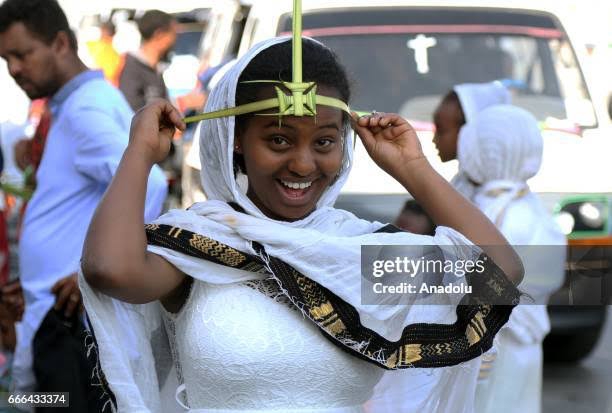
While united by the commemoration of Jesus’ triumphal entry into Jerusalem, Western, Eastern, and Ethiopian Christians mark the day in distinct ways. This article explores these contrasts, uncovering how liturgical calendars, rituals, and cultural expressions shape the celebrations.
It poses a thought-provoking question to the African church:
Should we celebrate Palm Sunday differently from Ethiopia, the home of the world’s oldest Bible? And, more broadly, should African doctrines reflect African spirituality and heritage?
The African continent is rich in history, culture, and spiritual heritage. Ethiopia, one of the earliest Christian nations, stands as a beacon of this history, preserving traditions that trace back to the 4th century and the ancient Ge’ez Bible—the oldest and most complete Christian scripture.
This profound heritage calls for reflection: Are modern African churches aligning their practices with their deep cultural and spiritual roots, or are they overly influenced by Western interpretations?
Aligning more closely with Ethiopia’s traditions might not only honor shared history but also enrich the African Church’s identity, offering a uniquely African expression of faith.
A Gĩkũyũ proverb says, “Mũgeni nĩ rũũĩ” (A visitor is like a river). Just as rivers carve new paths, visitors (or foreign influences) shape cultures but their influence should not erode everything. Even the river doesn’t erode resistant rocks.
However, it is worth asking: Has this influence enriched or diluted African Christianity?
One of the significant differences between the denominations of Christianity lies in the liturgical calendar. Western Christianity, predominantly practiced in Europe, the Americas, and parts of Africa, follows the Gregorian calendar, meaning Palm Sunday typically falls earlier in the year. It is being celebrated today.
In contrast, Eastern Orthodox Christians, found in Eastern Europe, the Middle East, and parts of Africa, and the Ethiopian Orthodox Church, adhere to the Julian calendar. They will observe it on April 20.
“There is a time for everything, and a season for every activity under the heavens”* (Proverbs 3:1) reminds us of the importance of understanding and respecting these differences in timing and tradition.
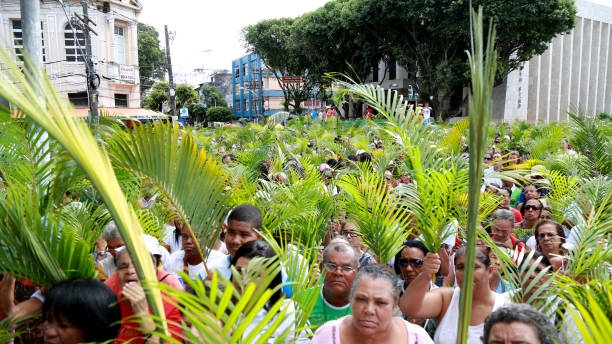
These calendar differences reflect deeper variances in focus and ritual. In Western Christianity, Palm Sunday primarily marks the end of Lent and transitions toward the Passion narrative. Churches often distribute palm branches (or substitutes like yew or willow), re-enact processions, and feature hymns and Bible readings.
Eastern and Ethiopian Orthodox traditions emphasize victory and peace, connecting Palm Sunday to Lazarus Saturday, the miracle of raising Lazarus from the dead. Their rituals involve the blessing of palm or olive branches and hymns highlighting Christ’s humility and prophecy fulfillment.
The Ethiopian Church, in particular, uses this time to reflect on Christ’s victory over death, echoing the African wisdom: “A single bracelet does not jingle,” meaning unity and collective focus bring strength.
Why do African churches celebrate Palm Sunday differently from Ethiopia – a nation that has preserved one of the earliest and most authentic expressions of the Christian faith? Could adopting the Ethiopian calendar and integrating African philosophies and traditions deepen the spiritual connection and cultural identity of the African Church?
As Proverbs 22:28 counsels, “Do not move an ancient boundary stone set up by your ancestors” – a reminder of the value in preserving our spiritual heritage.
The African Church is uniquely positioned to blend the universal truths of Christianity with the continent’s rich traditions. Christianity in Africa already incorporates vibrant cultural elements. dynamic worship styles, songs,dances and doctrinal teachings that often mirror Western ideologies rather than African spiritual philosophies.
For example, African concepts of community and harmony with nature could reshape doctrines to resonate more deeply with local values.
Emphasizing communal worship, care for creation, and shared responsibility could reflect the true spirit of African Christianity. As the Swahili proverb goes, “Unity is strength, division is weakness” – harmony within cultural and spiritual practices can strengthen faith.
Palm Sunday, whether observed in Western, Eastern, or Ethiopian traditions, showcases the richness of Christian faith. For the African Church, reflecting on Ethiopian practices and doctrines provokes an important question: How can we honor our ancient roots while creating a uniquely African expression of faith?
By exploring these traditions and their underlying philosophies, African Christians can embrace a deeper connection to their heritage, spiritual identity, and global faith community.
 Honia-Heal Afrika Initiative (HAI)
Leave a comment