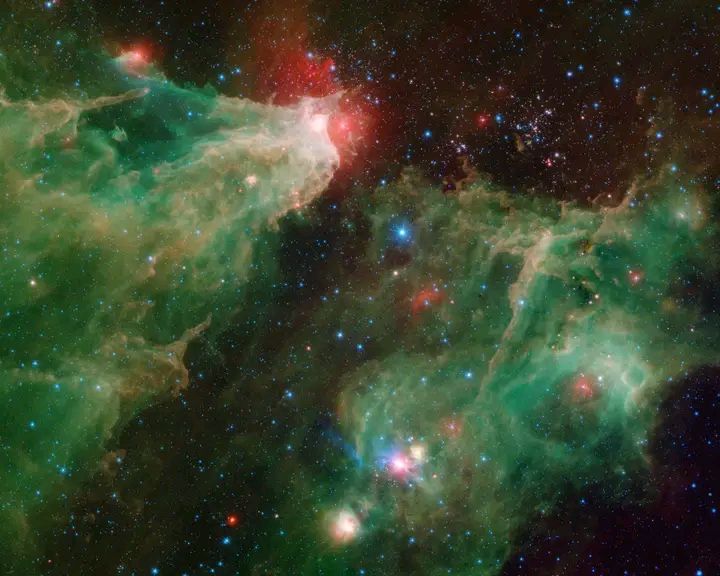
Cepheus, Time, and the African Question in a Fractured World — Episode 01
By Gĩtaũ wa Kũngʼũ
Under the old clear mbirũirũ—blue-black night skies of Murang’a—Mwene Nyaga’s stars sparkled on wet eyes and taught patience before they taught ambition. That patience now feels urgently political.
The world is convulsing. Economic systems marketed as democratic incubate moral and intellectual corruption. Power concentrates, justice thins, political feuds harden, and governance becomes spectacle rather than stewardship.
Across Africa and beyond, innocent lives are lost—from Sudan to Palestine, from Europe to West Asia—while climate systems strain, ice recedes, and digital technologies outrun ethics. Crisis piles upon crisis, yet solutions remain rushed, reactive, and shallow.
Against this turbulence, the sky offers an unexpected briefing note. Not prophecy. Perspective.
Cepheus, the ancient King of Aithiopia, is remembered not for conquest but for governance under pressure. When imbalance threatened his world, he consulted wisdom beyond ego and chose continuity over comfort. That decision restored order and etched his lineage into the heavens.
Today, it reads like a policy memo we ignored.
Modern crises are not random; they are patterned.
Hubris precedes collapse.
Extraction precedes instability.
Short-term triumph erodes long-term order.
Africa has lived this cycle acutely—through colonial partition, neocolonial debt regimes, proxy wars, and the weaponization of time itself: deadlines, interest, election cycles imposed against generational continuity.
Did you know? The name December actually means ‘The Tenth month’—not 12th! October is the 10th month with name denoting 8—Octo! While September, the 9th has a name for 7. Think about it—Septuagint—group of 70.
If we have been following a Calendar with false names, how faulty could we be? Google it.
It is here that the Gĩkũyũ Digital Cosmic Calendar (GDCC) and the Universal Modular Temporal Law (UMTL) emerge—not as mysticism, but as corrective architecture.
Their proposition is simple and radical: time is not merely mechanical; it is relational. By harmonizing calendars and clock bases across cultures—without erasing difference—these frameworks seek to synchronize human systems with cosmic rhythm, rather than forcing life into extractive schedules.
A civilization aligned with reality does not live permanently in rush hour.
This is not about losing or gaining days. It is about restoring coherence across temporal scales—from ancestral cycles to contemporary governance.
Policy fails when time is misaligned with life.
Africa’s wars illustrate the cost of temporal violence. Borders drawn without memory. Peace agreements rushed without healing cycles. Development plans measured in quarters while ecosystems require centuries to recover.
For over four hundred years, governance has been paced by calendars increasingly detached from cosmic rhythm.
History records repeated corrections—from the Julian to the Gregorian calendar, from Ethiopian and Hebrew timekeeping to Yoruba, Akan, Igbo, Chinese, Mayan, Hindu, and others. Yet none fully harmonized humanity with the universe’s pulse.
When time itself is misaligned, how do we expect the global village to integrate in an incoherent universal community?
Pan-Africanism, at its core, was always a temporal philosophy—unity not only across space, but across generations. Its failure was not conceptual, but architectural: confined within imported political clocks.
Meanwhile, Eastern philosophies emphasized cyclical balance, while Western systems optimized linear progress and control.
The global crisis is the collision of these worldviews without a mediating framework.
This is where the Axis Mũndũ Blueprint, Ceremonial Mathematics, and Planetary Renewal models matter for policy.
We can frame governance as custodianship, not conquest; measurement as meaning-bearing, not extractive; youth as emergent structure, not a demographic burden. Climate policy becomes renewal-based. Peacebuilding becomes generational repair. AI governance becomes culturally intelligent. Economics re-centers dignity over velocity.
Even the quiet passage of interstellar visitors—like 3I/ATLAS, which crossed our solar neighborhood this December—offers perspective. Systems larger than our politics move on regardless. The question is whether human institutions can adapt with discipline rather than panic.
Cepheus did not fight the sky. He aligned with its law.
Africa was not written into the cosmos later. It was placed there at the beginning of the story—and repeatedly edited out of modern policy drafts. Re-entry now requires precision, sustainability, humility, and time literacy.
The sky has always been an archive.
The task is to read it well—and govern accordingly.
The Great Healing is Here 🌟
Thaai Thathaiya Ngai Thaai 🕊️
(Gĩtaũ wa Kũngʼũ is a Gen-Z Pan-African policy thinker and indigenous science researcher working on linguistics, time, cosmology, and planetary renewal through African knowledge systems).
 Honia-Heal Afrika Initiative (HAI)
Leave a comment