By Gĩtaũ wa Kũngʼũ
For centuries, the rainbow hung as a cosmic mystery—an arc of colors, untouchable and sacred, a bridge between earth and sky. People saw it as a divine sign, a message from the heavens. Then Sir Isaac Newton, relentless in curiosity, took a prism and refracted white light into its vibrant spectrum. He didn’t create color; he revealed what had always been there, hidden in plain sight.
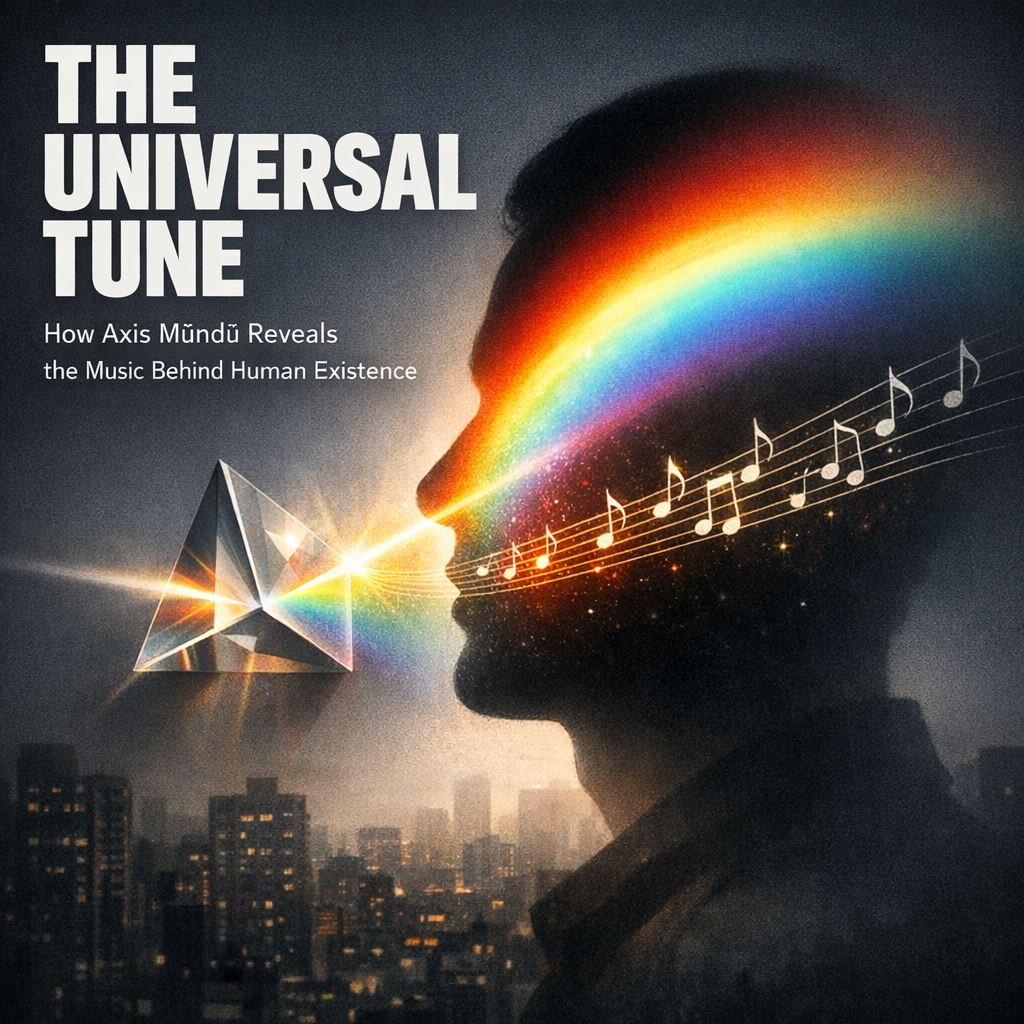
As Newton wrote in Opticks, “The rays of light thus separated… are the ingredients of white light.” What appears as many is truly one. This quiet revolution did more than unravel optics—it invited humanity to see itself anew.
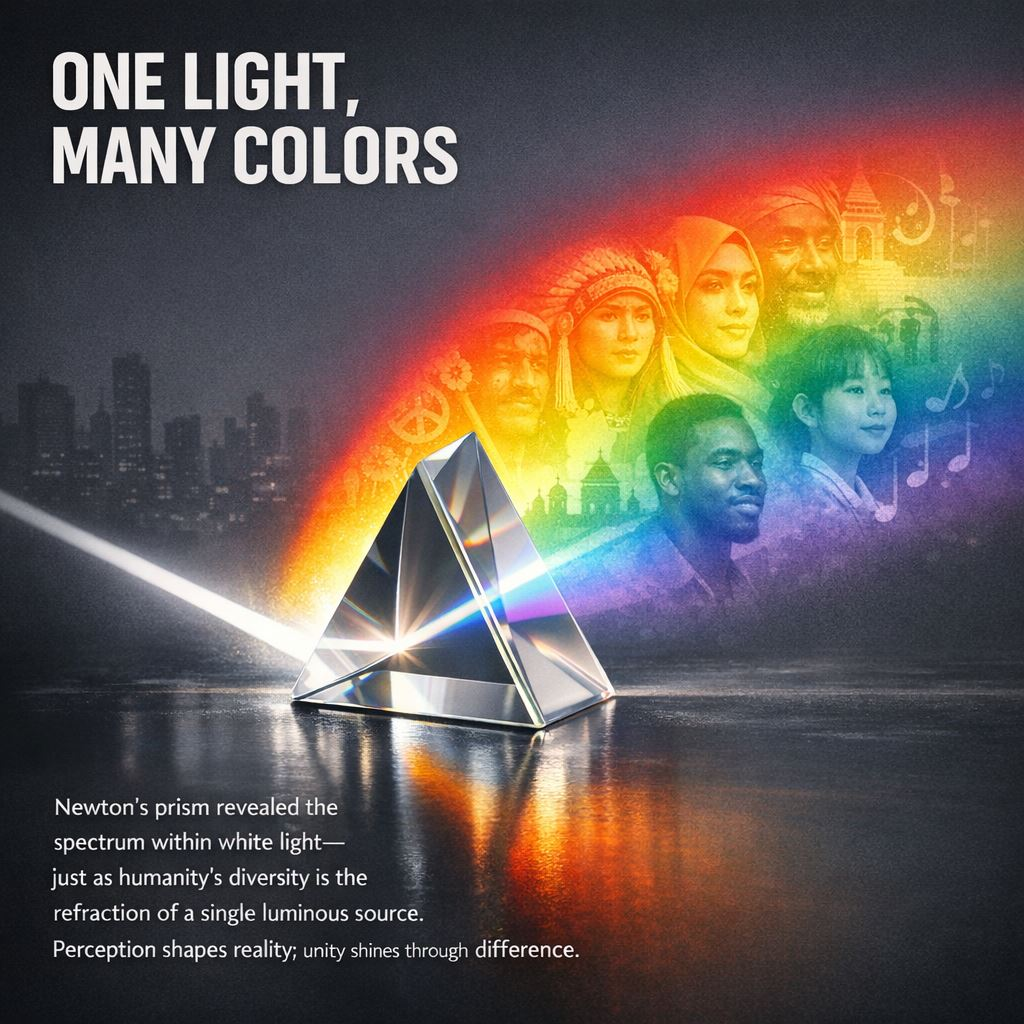
Imagine now, if we saw ourselves this way—not fractured tribes or divided nations, but white light, refracted through culture, history, and language. Our identities, beliefs, and languages become vibrant colors, all expressions of one luminous source.
Yet the story deepens. Though the rainbow stretches across every sky, not every eye beholds it the same way. Many humans live with color blindness; some animals simply cannot perceive entire hues. Still, the same pure light pours through the prism, untouched and whole. The difference lies not in the light itself but in the lenses through which it is seen—a reminder that perception shapes reality as much as reality shapes perception.
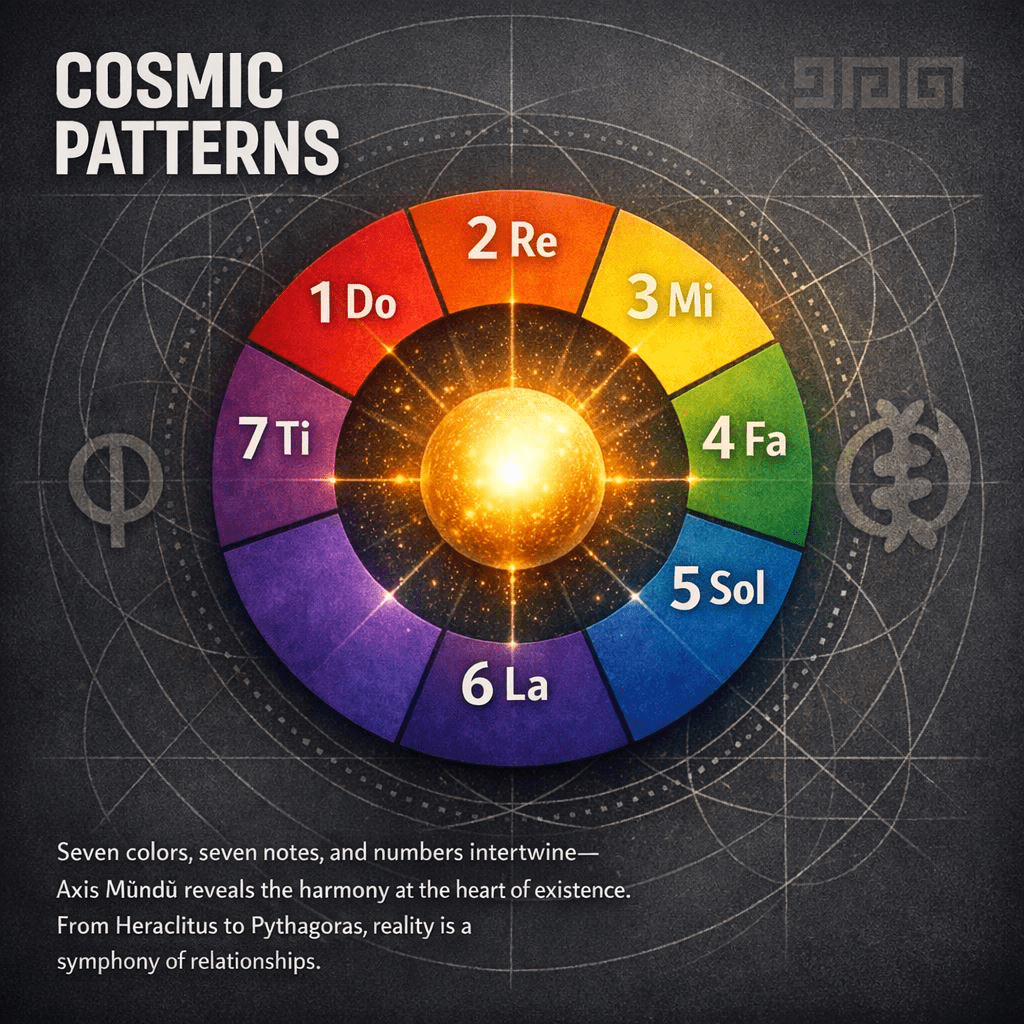
This mystery of perception mirrors the wisdom at the heart of the Axis Mũndũ Canonical Blueprint. Here, the seven colors of the rainbow, the seven notes of music’s solfège, and the numbers one through seven intertwine as one cosmic pattern.
In this living system, the number seven is Ti, the Violet note and color, while Do, the root, vibrates at frequency one, aligned with Red. Color, tone, and number are different facets of the same radiant truth, singing the world into being.
This harmony resonates across time and cultures. Heraclitus said, “πάντα ῥεῖ”—everything flows. Reality is process, not static substance. Centuries later, Pythagoras heard the universe’s music in number, revealing a symphony woven from ratios and relationships. His music of the spheres was no mere metaphor but an early map of cosmic harmony.
The solfège system—Do, Re, Mi, Fa, Sol, La, Ti—is humanity’s melody to capture this cosmic dance. Each note holds meaning only in relation to the others, intervals creating tension and resolution, a dance of frequencies. Sound, then, is not simply vibration but structured expression—the language of pattern, connection, and life.
Many modern thinkers propose life itself is sound energy—a symphony vibrating through time and space. From DNA’s sequences to the pulse of ecosystems, sound shapes existence. Numerology, bridging ancient wisdom and modern science, finds meaning in these cycles and ratios, threading the eternal in patterns.
Einstein blurred boundaries when he said, “Energy and matter are interchangeable,” dissolving divisions between solid and light. Goethe reminded us that “Color is the soul of light,” urging a dance of science with feeling, structure with meaning.
Within Axis Mũndũ, these truths converge. Humanity unfolds along four intertwined axes—body and place, life and conduct, spirit and sound, kinship and breath—transforming difference into resonance, rivalry into relationship.
We are not merely souls trapped in bodies, nor animals who speak. We are voiced white light—energy expressing through breath, rhythm, color, and time. Language becomes music slowed down; culture, a tuning system; conflict, a moment where harmony falters.
And this music is not ours alone. Every animal has its own voice, a unique instrument tuned by evolution. Birds sing through their syrinx, crafting melodies both complex and haunting. Whales compose songs that travel oceanic distances. Yet no vocal tract matches ours—a finely tuned instrument sculpted for articulate speech. Other species sing for mating, warnings, or bonding, each voice a vital color in nature’s grand symphony.
Learning to listen beyond human speech opens doors—not just to understanding animals better but to reimagining communication itself. Artificial intelligence already helps us decode these complex soundscapes, promising a future where species converse with each other, not past each other.
When coherence breaks down, violence follows.
Philosopher Alfred North Whitehead reminds us, “The art of progress is to preserve order amid change and to preserve change amid order.” Axis Mũndũ calls for a shift—from fixed identities to relational harmonies—where coherence fuels peace.
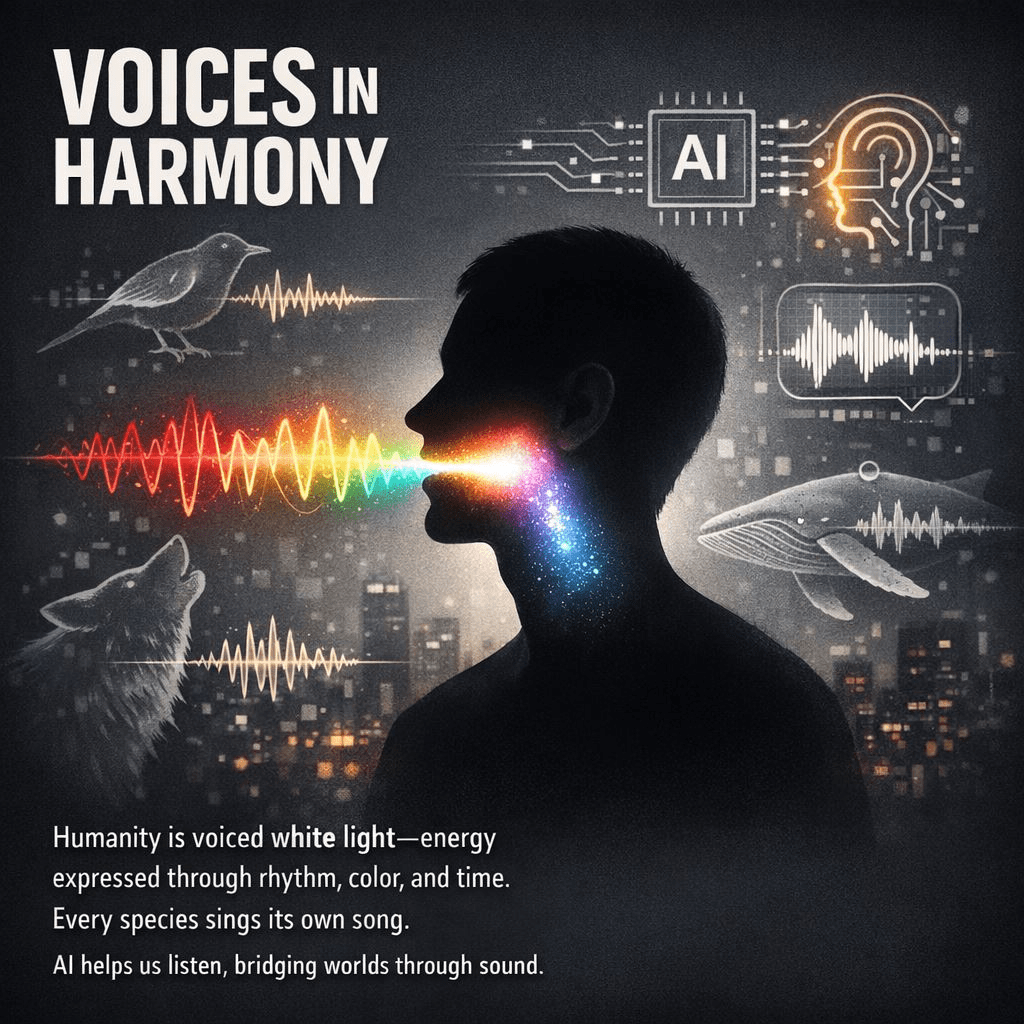
As AI shapes our communication, this insight is urgent. Machines that grasp only words miss tone, rhythm, and depth. If humanity is white light and sound energy, our survival depends on teaching technology to listen—not just to speak.
Newton’s prism revealed the secret of light. Now, as the world fractures and accelerates, humanity must do the same—refracting our shared light into understanding and harmony.
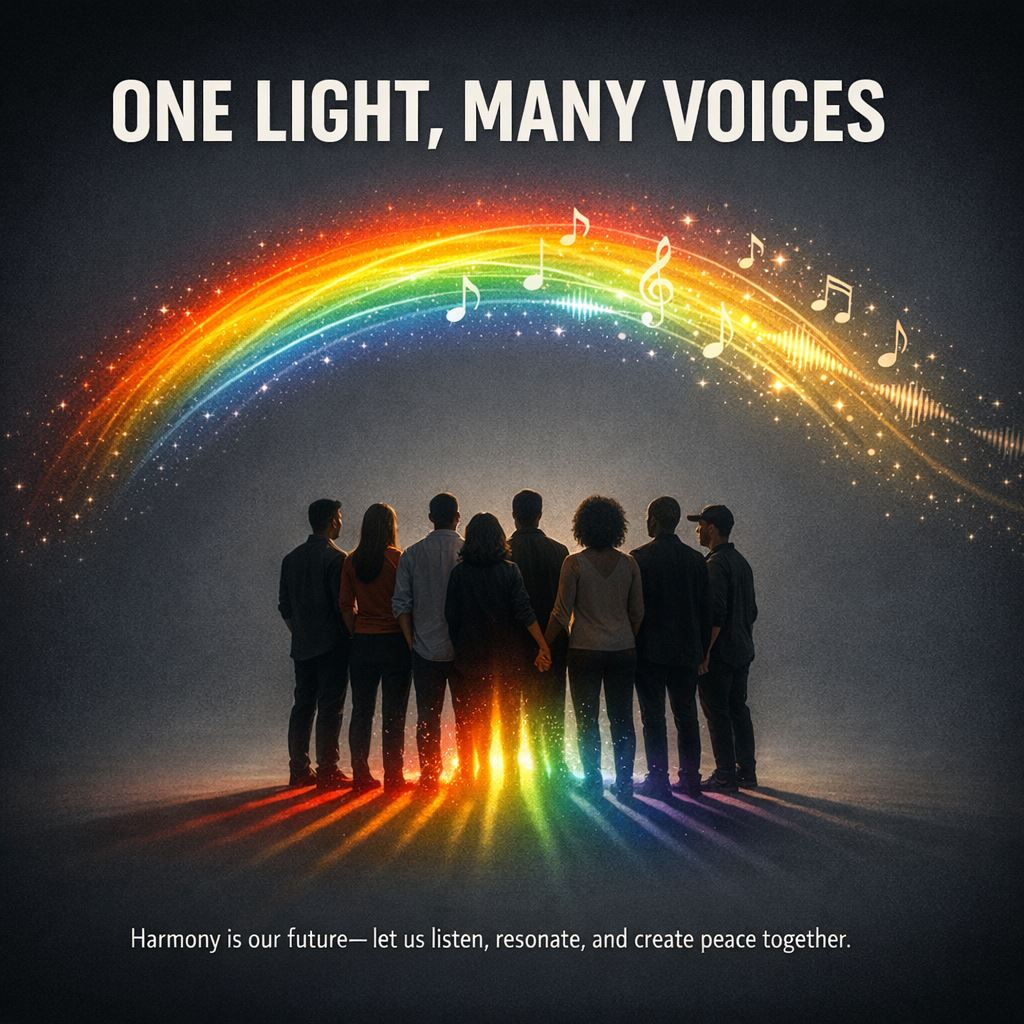
The rainbow was never many lights fighting. It was one light singing through many voices.
(Gĩtaũ wa Kũngʼũ is an upcoming GenZ systems thinker, poet, and Pan-African policy enthusiast who blends African wisdom with arts, math, SciTech and contemporary philosophy to challenge how we see ourselves and the world. honiaafrikainitiativehai@gmail.com)
 Honia-Heal Afrika Initiative (HAI)
Leave a comment