By Gĩtaũ wa Kũngʼũ
The Classroom Where It Began
It began in a dusty classroom in Kĩgumo, Mũrang’a County, where the chalk dust had more consistency than some of our national plans.
While teaching English and Literature at Ndũgamano Secondary School, I decided to revive the Journalism, Drama, Environment and Music Clubs. What I found was both heartbreaking and strangely hopeful. I watched students whose eyes lit up on the playground, stage or behind a microphone, only to dim again when the exam timetable arrived.
They were full of creative fire, yet the system kept measuring them with a ruler that only recognised one kind of intelligence. Many were quietly labelled “failures” while carrying gifts that could have lit up stages, newsrooms, studios or sports fields.
The Unsettling Questions
I began to remember friends whose talents had slowly evaporated after school, like morning mist on the Aberdare slopes. I looked at my own research ability and felt it under quiet siege.
Even among colleagues I saw teachers who had wandered into the profession the way a man sometimes wanders into the wrong wedding — present, functional, but clearly meant for another celebration.
A stubborn question took root:
Every person is born with a talent, a gift, a purpose.
How many ever discover it?
And how do we stop a nation from becoming a graveyard of unrealised gifts?
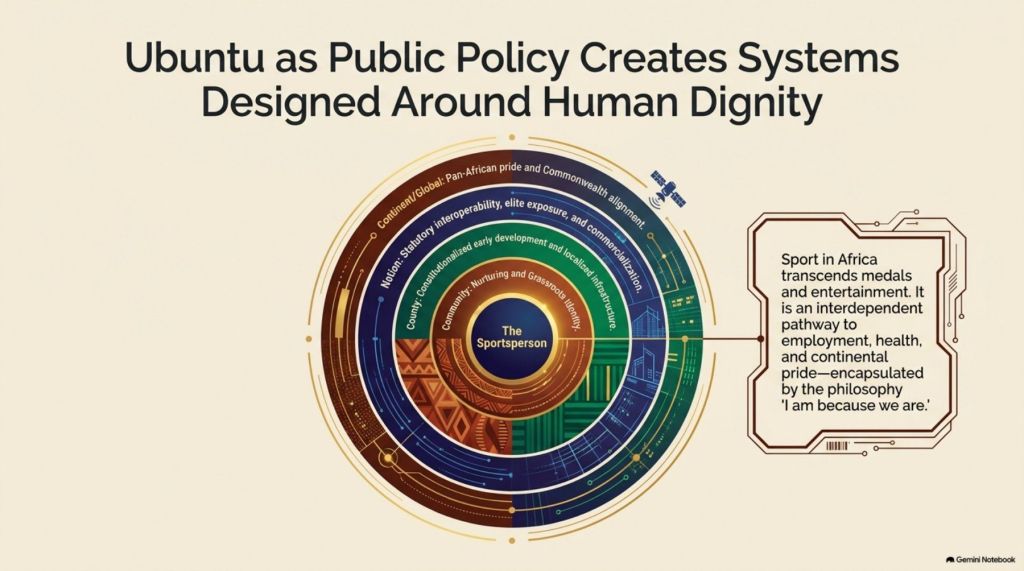
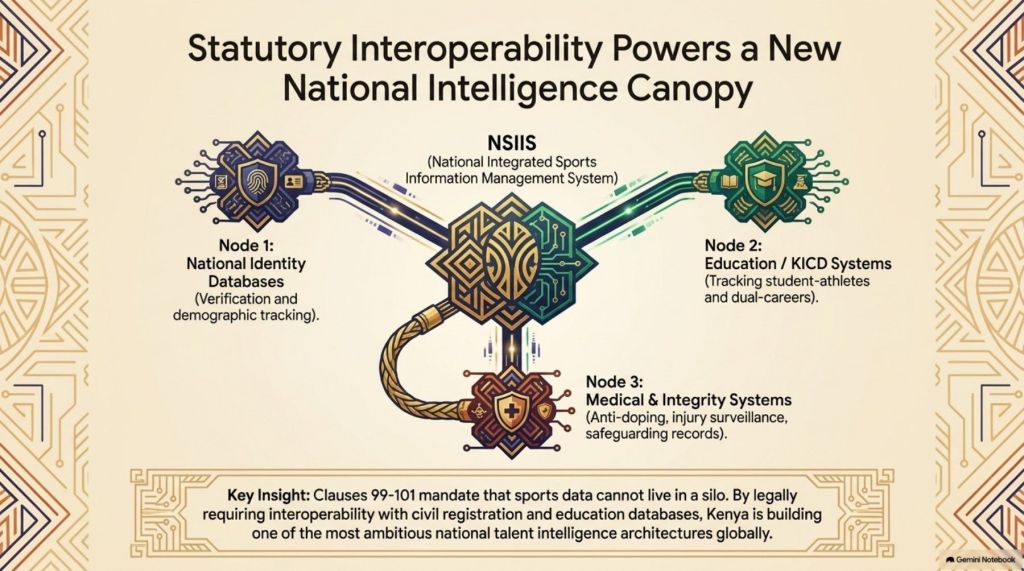
These questions refused to behave. They grew into the Kenya Talent Development Database a stubborn attempt to make sure potential is noticed early, tracked with dignity, and given a fighting chance. That seed later matured into the broader vision of a National Integrated Sports Information Management System, with an even larger dream: a United Nations Sustainable Talent Development Database that might one day help the world waste fewer human beings.
From Conviction to Formal Contribution
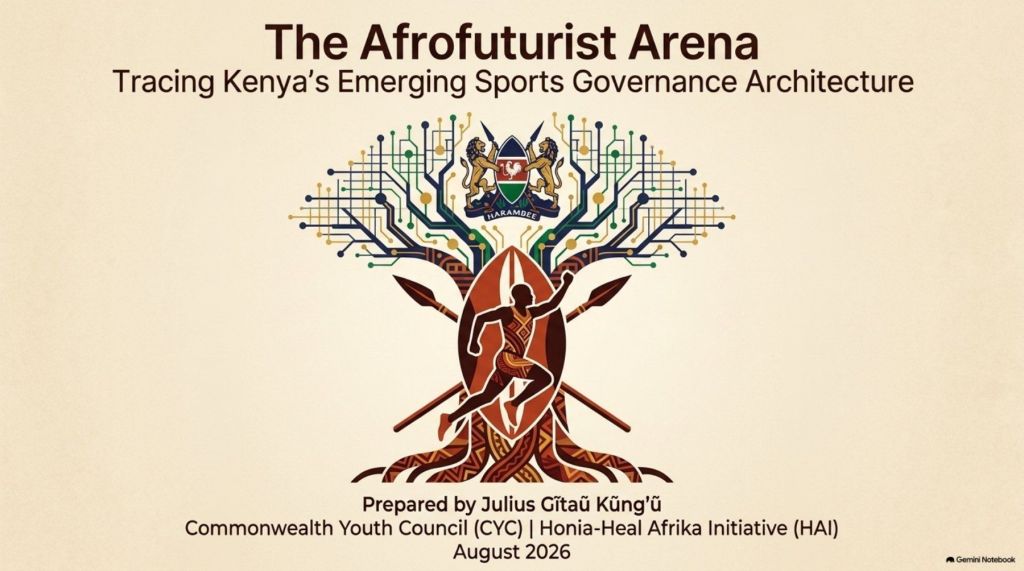
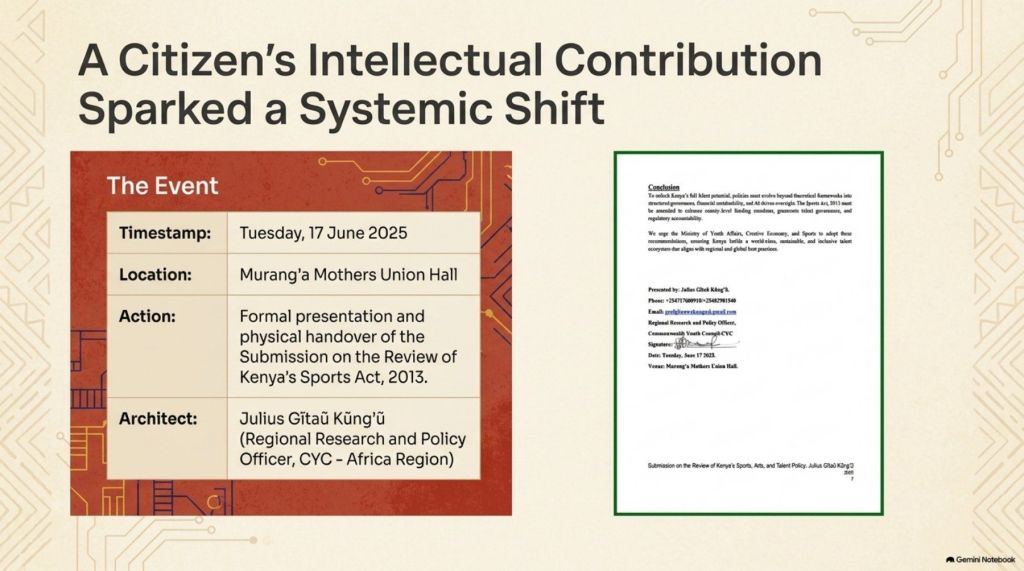
In June 2025 the conviction left the classroom and walked into the public square. I prepared and formally presented the Submission on the Review of Kenya’s Sports Act, 2013 at Murang’a Mothers Union Hall. The document did not offer poetry. It offered instruments:
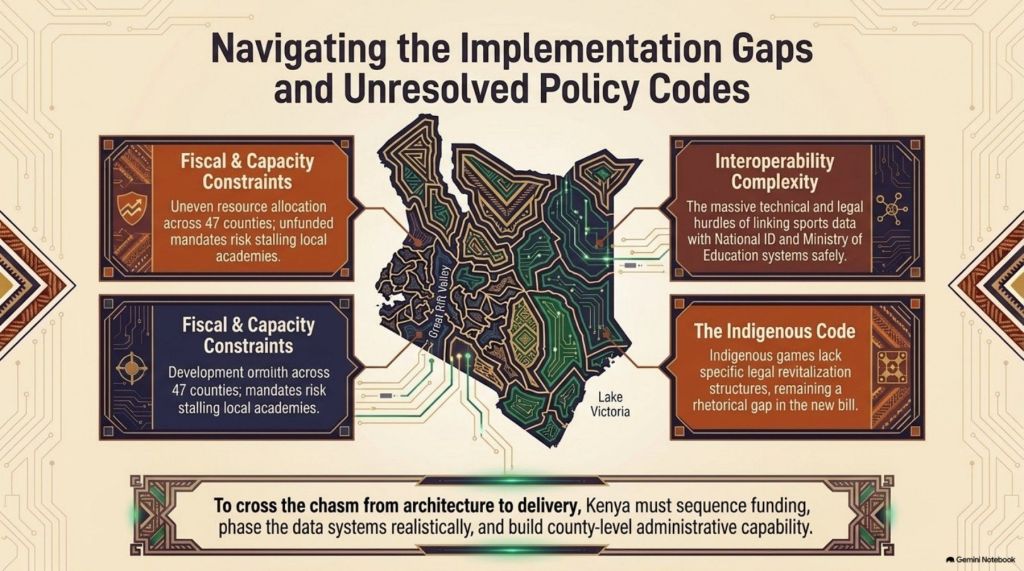
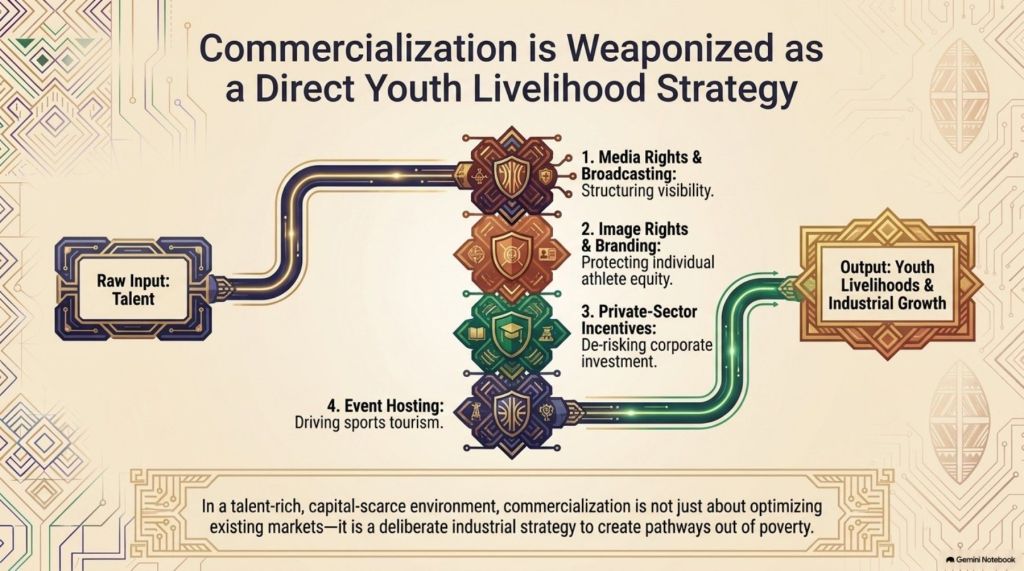
clearer county responsibility, talent academies, a national database, pathways for monetising talent, data-driven management, integrity mechanisms, and space for indigenous sports. It was submitted through my role with the Commonwealth Youth Council — Africa Region, and under the banner of Honia-Heal Afrika Initiative.
Quiet Congruence Amid Political Heat
What followed has been both instructive and mildly amusing. While the national political temperature continues to rise and fall like a poorly regulated jiko — producing plenty of smoke, occasional sparks, and very little sustained cooking — a quieter process was underway.
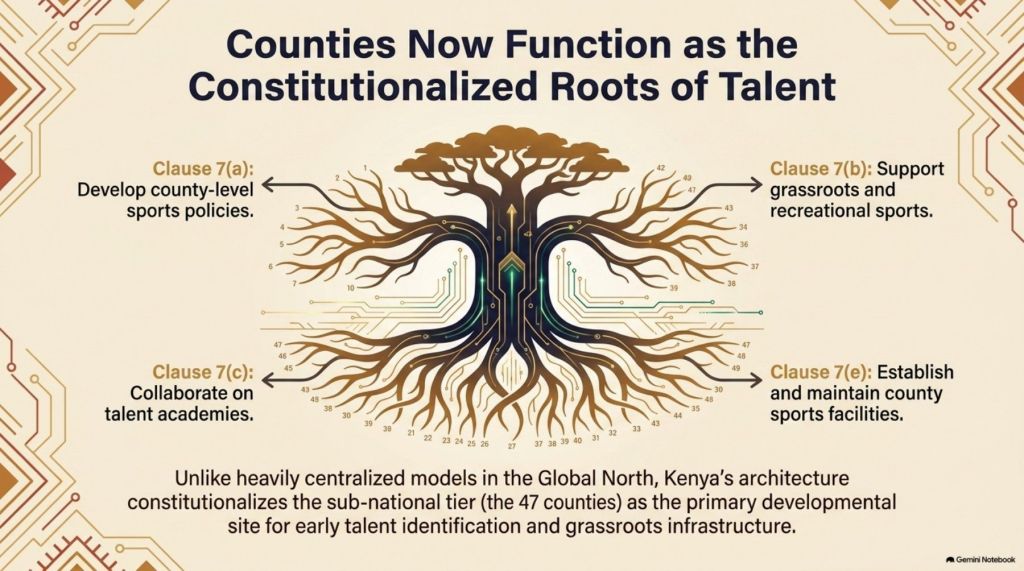
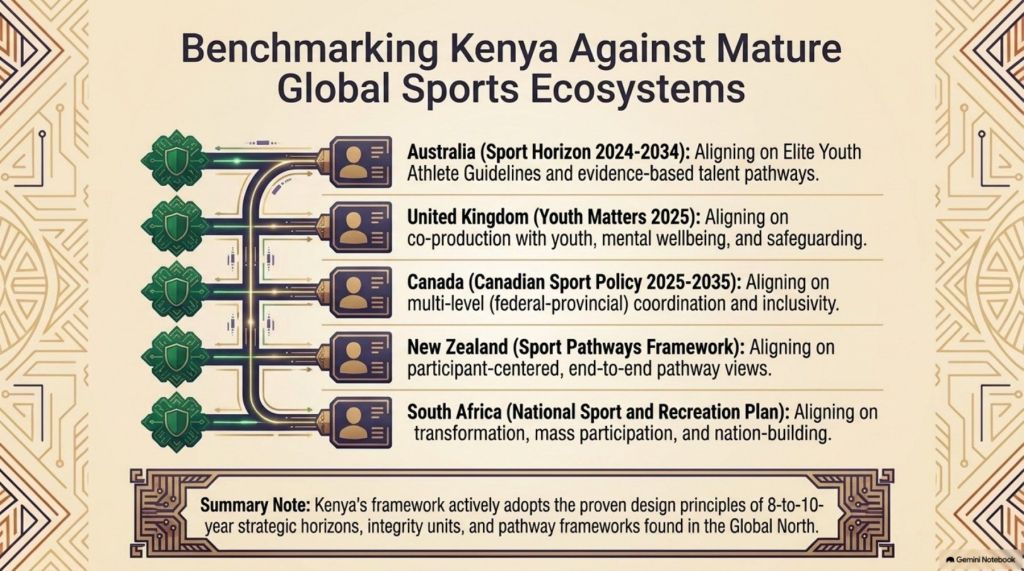
A careful comparison of that Submission with the Draft National Sports Policy 2025 and the Sports Bill 2026 reveals clear points of congruence. The strongest alignments appear in the National Integrated Sports Information Management System, the expanded role of counties in talent development, and the deliberate turn toward commercialisation of sport.
As the old proverb reminds us:
“The child who is not embraced by the village will burn it down to feel its warmth.”
A nation that fails to embrace its young talent should not be surprised when that same energy later expresses itself in less productive ways. The Submission was a small attempt to argue for embrace rather than neglect.
Not a Victory Lap
This is not a victory lap. Policy is not a football match with a final whistle and a trophy.
Influence is usually quieter, more cumulative, and harder to photograph than a political rally. Yet the record shows that a serious, instrument-rich contribution from a classroom-inspired conviction can still find its way into national frameworks — even while the wider political theatre remains busy with its familiar performance of heat without always delivering light.
A Continuing Call
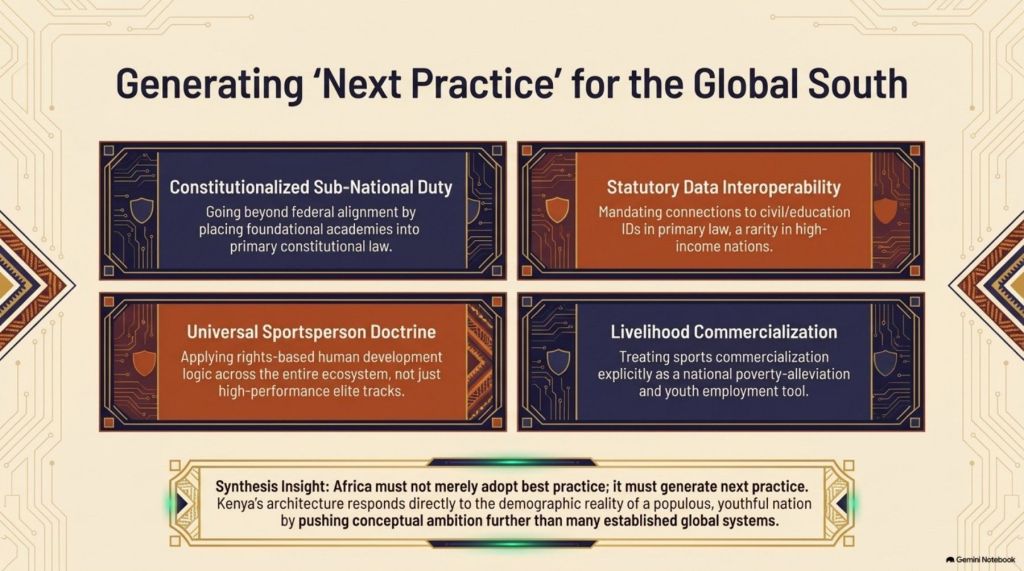
For Honia-Heal Afrika Initiative, the journey affirms a simple belief. Healing begins when potential is seen. Flourishing begins when that potential is protected and given room to grow. What started as observation in a secondary school in Mürang’a has become a contribution to national policy and a continuing call: Africa must not only import best practice. It must generate next practice — rooted in its own soil, its own young people, and its own refusal to keep burying talent.
The political heat will continue to rise and fall. The deeper work is to keep the fire where it belongs: under the pot of human development, not merely in the air for spectacle.
All praise, honour and glory belong to Mwene Nyaga.
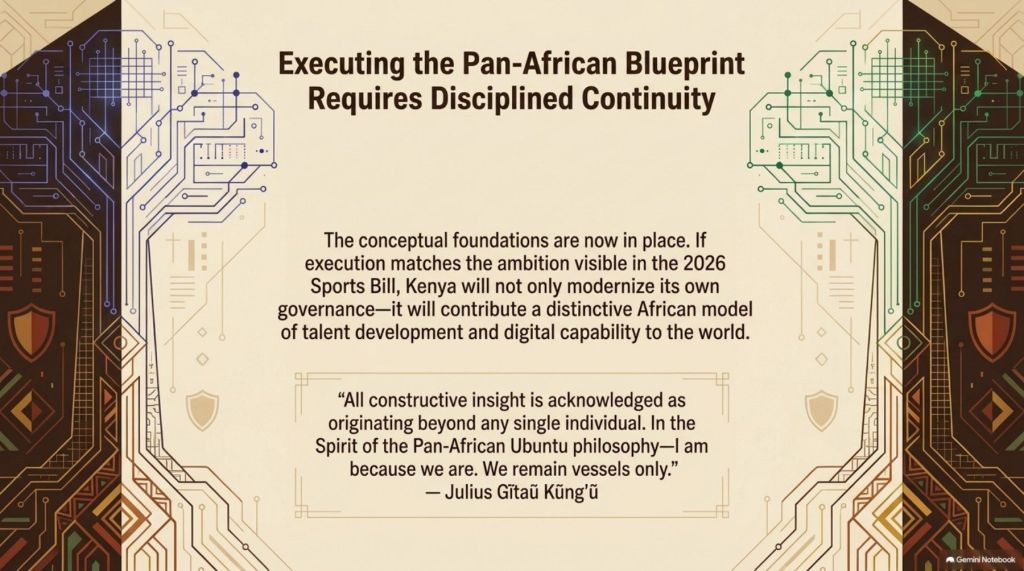
We remain vessels only.


Leave a comment