EPISODE 1
By Gĩtaũ wa Kũngʼũ
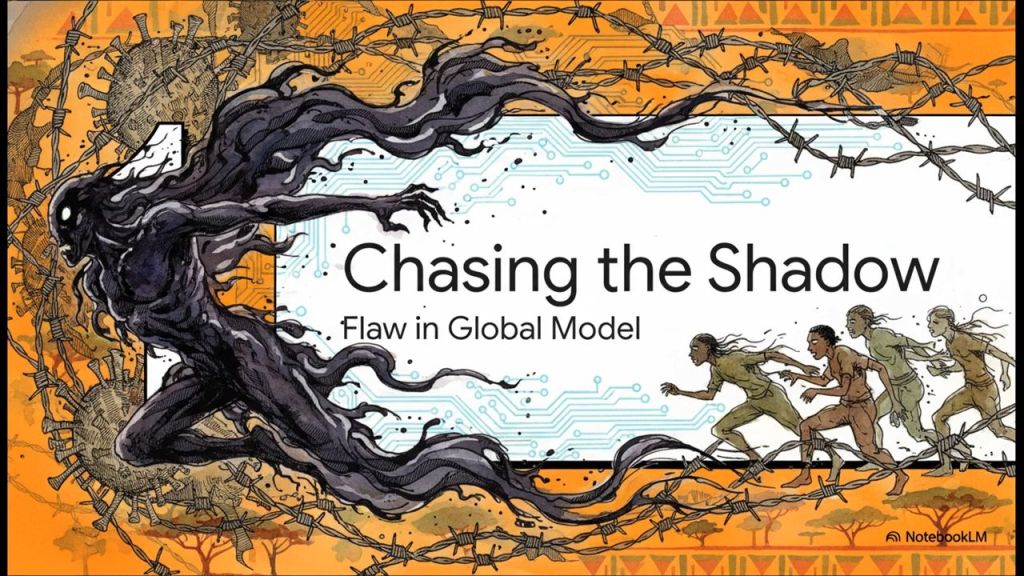
When I opened The Star 🌟 newspaper, I did not expect to see my own scientific journey staring back at me.
The morning of August 4, 2026, arrived with a clarity that no espresso could provide. I sat in the early light, the crisp pages of The Star newspaper in my hands, feeling a profound intellectual jolt. Just days prior, the Kenya Medical Research Institute’s Scientific Ethics and Review Unit (KEMRI-SERU) had officially approved my prioritized Bundibugyo Ebolavirus (BDBV) epitopes for wet-lab validation.
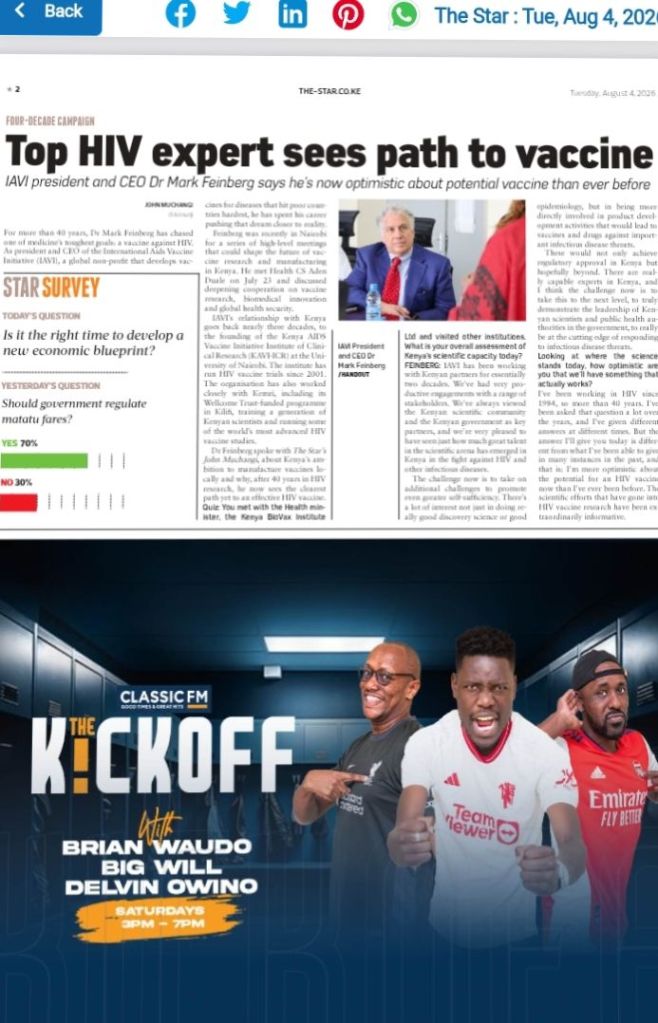
As I unfolded the paper, I was met with the face of Dr. Mark Feinberg. Download here: https://www.mgazeti.com/issue/the-star-news-paper-4th-august-2026/read
The headline announced:
“TOP HIV EXPERT SEES PATH TO VACCINE.”
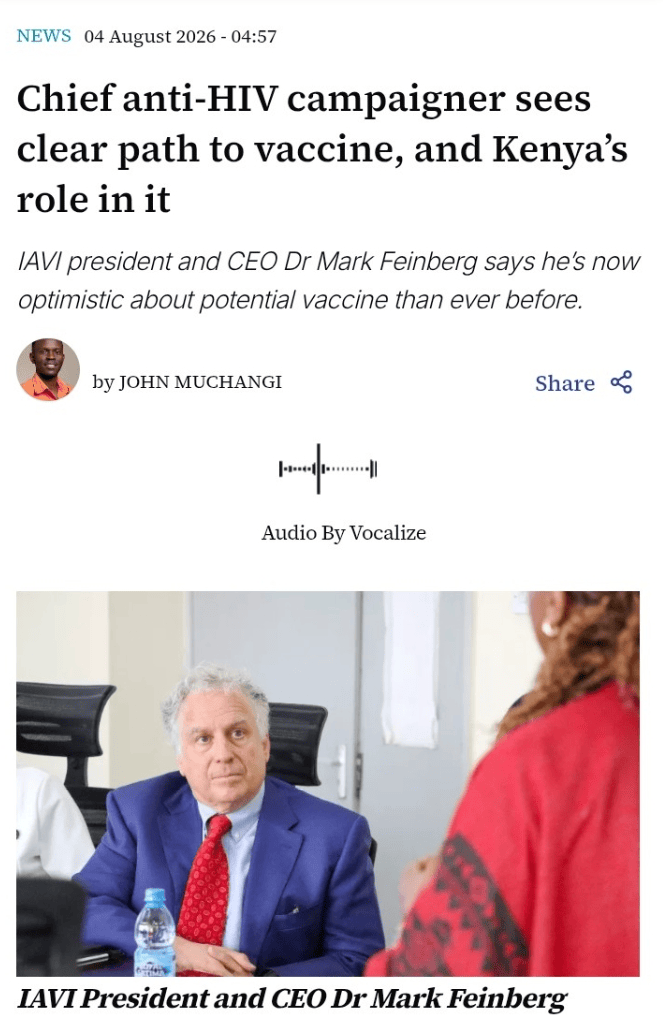
Online, the longer version was even more striking: l
“CHIEF ANTI-HIV CAMPAIGNER SEES CLEAR PATH TO VACCINE, AND Kenya’s Role In It.” Read here: https://www.the-star.co.ke/news/2026-08-04-top-hiv-expert-sees-path-to-vaccine
The interview was with Dr Mark Feinberg, President and CEO of the International AIDS Vaccine Initiative (IAVI). After more than 40 years pursuing one of medicine’s hardest problems, he was saying that he had never been more optimistic about the possibility of an HIV vaccine.
Interesting. Very interesting. Because I had been thinking about vaccines too.
Now, let us pause here.
There it was again: the Number “40-year” motif that has haunted my walk through this world. Feinberg, the head of IAVI, has spent 40 years chasing an HIV vaccine. The introduction to my TikTok podcast 76 days earlier has uses the same concept in the article’s introduction: “Chasing the virus for 40 years.”
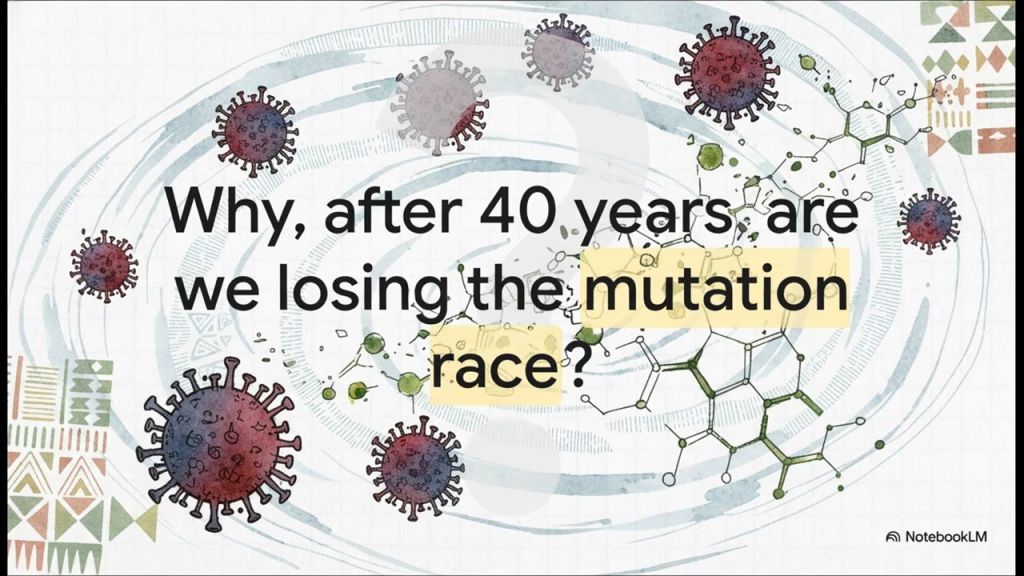
Watch Indigenous African Axis Mũndũ AI Model Freezes HIV Virus: /https://vm.tiktok.com/ZS4grH9ce/
My own path is rooted in the Mwarubaine—the “tree of 40 cures.” In our Gĩkũyũ tradition, we know the Mwarubaine for its bitter leaves that bring sweet health. Seeing the institutional titan and the independent sage meet on the same page, organized around the same 40-year shadow, felt like the universe was finally alignment its stars.
I remembered my blog when I delved into herbal research in March, 2025. It was a moment where indigenous wisdom and rigorous biophysics shook hands.
Read also: The Return of Mwarubaine: A sacred Journey for rediscovering 40 Ways to Africa’s healing and prosperity: https://wp.me/pfcMdY-3N
This news comes not in any other national newspaper but THE STAR 🌟.
The Star itself serves as our point of orientation, the fixed light overhead guiding us toward the “Path” mentioned in the headline. Dr. Feinberg, coming from the West made this interview with no other but The Star 🌟 journalist, East of his background. Like the wise men who followed The Star 🌟 in the East to find the baby Jesus, the saviour.
Venus ‘The Evening Star’ was the brightest in the 4th August nightsky. Venus as The Evening Star traditionally signals transition, reflection, and the closing of a cycle. Yet, while the article publicly celebrates Kenya’s scientific contribution—framed through Dr. Feinberg’s optimism—it simultaneously marks a quieter dusk for Kenyan scientists themselves: visible, yet not fully centered.
But before I tell you about that connection, look at the names.
The Forerunner and the Messenger: A Symbolic Onomastic Reading
I believe there is a “symbolic grammar” to reality. Look at the messenger who brought the news: the journalist John Muchangi. In Gĩkũyũ, Muchangi is the unrelenting traveler, the gatherer who moves here and there to synthesize the world. As we say, “Kutembea kwingi kuona mengi” (to travel much is to see much. To know much.). He is the personification of the principle that knowledge is gathered through encounter.
Pair this with the name John—the biblical “voice in the desert” preparing the path for the coming of The Gospel, that was announced by a bright Star—and the symbolism becomes complete.
Seeing the “Fine Mountain” (The Feinberg Correspondence)
Reading Feinberg’s interview through an onomastic lens reveals deeper layers. The name Mark means “to see” or “to notice,” or “a boundary” and other interesting meaning.
The name Feinberg translates from German as “Fine Mountain” or “Fine Hill.” In our culture, we look toward Kĩrĩnyaga, the Mountain of Dazzling Whiteness, for the ultimate clarity. Name Kenya is derived from the name Kĩrĩnyaga.
But there is a Pan-African victory hidden here. The Gospel of Mark was written by John Mark, the first patriarch of the See of Alexandria, Egypt. By linking the “Mark” of modern vaccine science to the “Mark” of Alexandria, we reclaim a historical continuity of African intellectual leadership.
Interestingly, we find not just an onomastic connection between the interviewer Muchangi and the interviewee Mark but also the writing connection through the name John Mark.
When Dr. Feinberg stands on his “Fine Mountain” and says, “I’m more optimistic about the potential for an HIV vaccine now than I’ve ever been before,” he is finally seeing the structural truths that I have been observing from the roots.
Decoding the Advert: Strange coincidences
CLASSIC FM.
Classic. The word itself carries a curious cargo: exemplary, archetypal, enduring, traditional, original, something that survives its moment and becomes a reference point for others.
The advert promoted The Kickoff, running from the 9th hour into the evening. And there they were: Brian Waudo, Big Will, and Delvin Owino.
Brian, positioned in spectacles, seemed to direct attention toward Big Will. Big Will—whose real name is Bill Mbote—stood in a white shirt boldly declaring TEAM VIEWER, looking almost like a footballer who had just scored.
Then there was Delvin Owino, wearing an Arsenal jersey bearing Fly Emirates, with a posture that seemed to say: Listen.
My symbolic brain was now fully employed. 😂
Brian carries an old Celtic association with bri, connected with height or a hill. Suddenly, the “hill” returned.
Bill evokes resolve and strength. A protector. A determined one.
And Owino, a Luo name associated with wino, the umbilical cord—a striking image of connection, origin and the bond between a person and the place from which they came.
I am not claiming that these people secretly arranged a coded message for me. Absolutely not.
I am saying that symbols become interesting when they collide with the questions already occupying your mind.
And the page was becoming a strange little theatre of hills, paths, origins, movement, vision, protection, connection and the future.
Then I remembered my own work.
On 14 July, 2026, I had presented my prioritised BDBV epitopes at KEMRI. Later, the Scientific Ethics and Review Unit approved progression toward wet-lab validation.
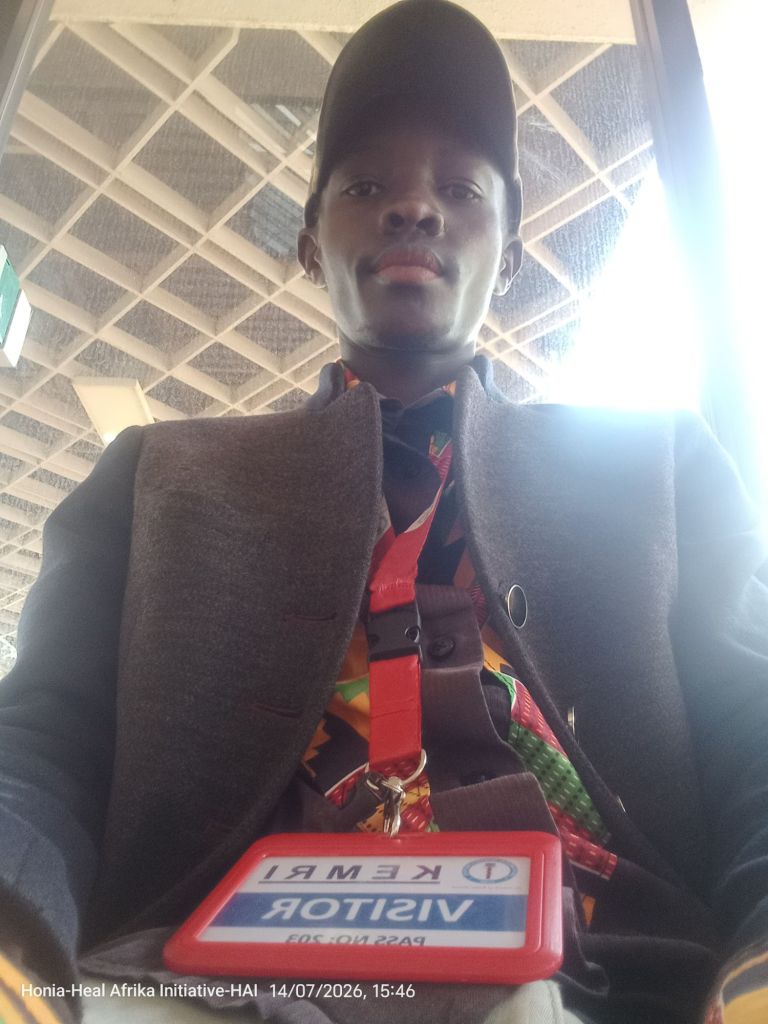
So while Dr Feinberg was speaking publicly about a clearer path toward an HIV vaccine—and about Kenya becoming more deeply involved in vaccine development and manufacturing—I was sitting with my own much smaller, much younger research journey.
The difference is enormous.
I am not claiming equivalence with IAVI, KEMRI, or decades of HIV vaccine science. That would be intellectually dishonest.
What struck me was the direction.
The newspaper was talking about Kenya moving from being primarily a consumer of vaccines toward becoming a stronger participant in discovery, development and manufacturing.
That is precisely the larger question haunting my own work:
Can African innovation grow from African soil, using modern science without severing itself from indigenous intellectual roots?
That is where Axis Mũndū enters this story. Not as a finished vaccine. Not as a clinically validated technology. Not yet.
Rather, as an attempt to develop a computational framework whose roots are deliberately connected to indigenous epistemology while engaging contemporary computational biology.
And suddenly, the newspaper page felt less like an ordinary page. Perhaps it was a coincidence.
Perhaps it was simply my mind noticing patterns because I had already been thinking about these things. Or perhaps the deeper lesson is simpler:
Sometimes the world does not send you a message. Sometimes it gives you a mirror—and you finally recognise what you have been saying all along.
And that is where this story becomes interesting.
Because the newspaper came after my research journey had already begun.
So where did my journey actually begin?
That is Episode 2.


Leave a comment